

Why is there always so much noise around listings?
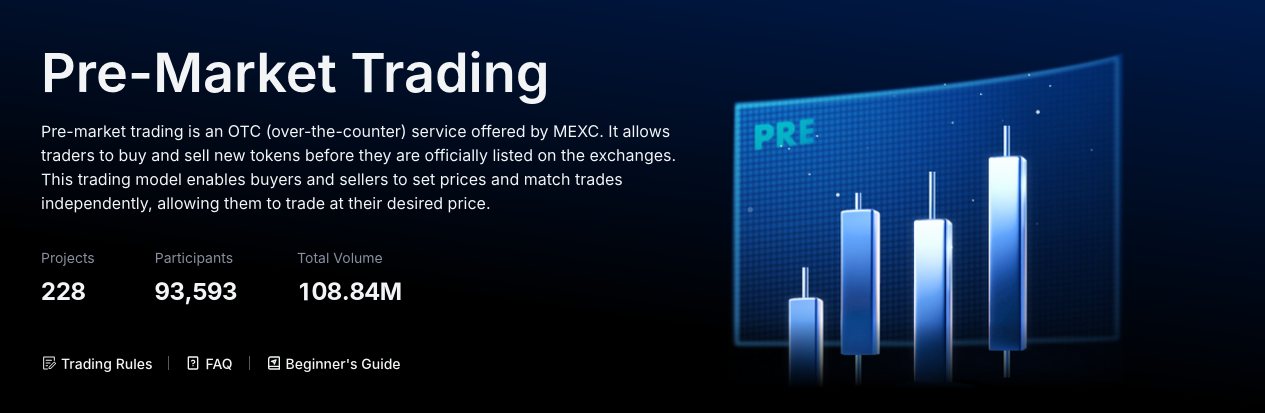
When an exchange adds a new token for trading, the market gets a fresh asset and attention often spikes quickly. That affects price, liquidity, the project’s visibility, and creates trading opportunities. Before the full start, there’s often a “premarket” stage — a mechanism that lets participants agree a price in advance and trade before the official listing or before spot/futures open.
If you want to monitor new listings/announcements on exchanges:
MEXC https://promote.mexc.com/r/Rl72m1XG
CoinW https://www.coinw.com/ru_RU/register?r=26184209
KCEX https://www.kcex.com/register?inviteCode=3314NZ
Toobit https://www.toobit.com/ru-RU/register?invite_code=YyhCwb
HTX https://www.htx.com/invite/ru-ru/1f?invite_code=c94e8223
What is a new listing?
A new listing is the moment an exchange officially adds a token and opens trading in specific pairs (for example versus USDT). Typically, deposits/withdrawals open as well, alongside trading competitions, marketing campaigns, and increased market-maker activity so trading starts with workable liquidity.
Why do exchanges and projects need a listing?
For the exchange, it means more volume and fees, new users, and a news hook. For the project, it means access to liquidity, a wider audience, stronger reputation, and a market price that becomes a “shop window” for investors and partners.
What is premarket?
Premarket is trading an asset before it fully launches on an exchange’s market. Depending on the venue, it can look like:
- early trading via an internal “pre-listing” mechanism, where trades are fixed in advance and settled at launch
- a kind of internal “grey market”, where participants trade expectations and future delivery
- a pre-order/obligation model, where one side commits to deliver tokens and the other commits to pay at an agreed price
The core idea is the same: price discovery happens before the main market opens, and early participants can enter before the bulk of liquidity arrives.
Premarket is available on MEXC: https://promote.mexc.com/r/Rl72m1XG
Why use premarket?
Creating a reference price
Premarket gives the market a “draft” price. When the main market opens, traders already have expectations and a reference point, which can reduce chaos (though it won’t remove it entirely).
Early access to potential moves
At listing start, volatility is often high. Premarket is a way to take a position earlier, when liquidity is not yet at its maximum and supply/demand imbalances can be stronger.
A hedging tool
If someone already has tokens (e.g., allocations, airdrops, early rounds), premarket can allow them to lock in a sale price in advance or partially hedge the risk of a drop at listing.
How is the process usually structured?
Announcement and parameters
The exchange announces the asset, the start date, and conditions: pairs, time, limits, settlement rules, and fees.
Premarket trading
Participants place orders or agree trades, often under special rules: limited volumes, higher collateral requirements, and separate execution/settlement logic.
Settlement at launch
At listing or market opening, the exchange settles: token delivery and funds debit, or another form of clearing under its rules.
Pros of a new listing and premarket:
Trading opportunity
Listings often come with strong impulses, fast price gaps, and volume surges — a suitable environment for active strategies.
Earlier price discovery
Premarket creates a reference level and can sometimes reduce the “empty book” problem at launch, when everyone is guessing fair value.
More attention for the project
A listing boosts awareness, increases the holder base, and drives discussion, which can support ecosystem growth.
Faster liquidity
Projects and holders can convert tokens into more liquid assets sooner, and the market can enter/exit without complex OTC deals.
Downsides and key risks
Risk of extreme volatility
In the first minutes/hours, price can move tens of percent in either direction. Drivers include thin liquidity, emotions, latency, market orders, and aggressive market-making.
Risk of manipulation and the “shop-window effect”
At launch, price can be artificially pumped or pushed down by large participants. The media spotlight makes the asset convenient for pumps and sharp sell-offs.
Risk that premarket doesn’t match the real market
Premarket prices can diverge significantly from the opening price on the main market. Causes include limited liquidity, a narrow participant set, side imbalances, and speculative expectations.
Liquidity and slippage risk
Even if it looks like “there’s a price”, execution may suffer because there’s little depth in the order book. Entries/exits can be worse than expected, especially with market orders.
Risk from settlement terms and venue rules
Premarket often comes with special rules: settlement timing, penalties for non-performance, margin requirements, and restrictions on cancelling orders. Misunderstanding the mechanics can lead to unexpected losses.
Tokenomics and unlock risk
After listing, token unlocks for early investors or the team may begin, creating sell pressure. If the market hasn’t priced that in, price can correct sharply.
Regulatory and regional restriction risk
Some exchanges restrict participation by country or require enhanced KYC. That affects access to premarket and the ability to receive/withdraw the asset when it matters.
Technical outage risk
At listing start, delays, UI freezes, API lag, price display errors, and partial fills can happen. In those moments, discipline matters more than “click speed”.
Why this matters to participants — and how to approach it rationally
Know your objective
Premarket and listings are not “guaranteed profit” — they’re tools. The goal might be early speculation, price locking, or a cautious long-term entry. Without a goal, it’s easy to get trapped by emotion.
Check the mechanics and conditions
Before participating, understand how the exchange settles trades, when settlement happens, what fees/penalties apply, and whether there are limits or collateral requirements.
Assess liquidity and position size
At launch, it’s often better to trade smaller than you want. Slippage and gaps can eat the entire expected profit.
Factor in tokenomics and the event calendar
Look at supply, unlock schedule, team/investor allocations, presence of market makers, utility plans, and upcoming events that could trigger demand spikes or sell waves.
Summary
A new listing is when a token gains access to broad liquidity and the mass market. Premarket is a way to form a price and trade earlier, before the main market opens. These mechanisms can be useful for exchanges, projects, and traders, but they carry elevated risks: volatility, slippage, price divergence, complex settlement rules, and tokenomics effects. The rational approach is to set a goal, read the venue rules, account for liquidity, and manage risk — rather than trying to “get in during the first seconds at any cost”.
You can track new listings here:
MEXC: https://promote.mexc.com/r/Rl72m1XG
COINW: https://www.coinw.com/ru_RU/register?r=26184209
KCEX: https://www.kcex.com/register?inviteCode=3314NZ
TooBit: https://www.toobit.com/ru-RU/register?invite_code=YyhCwb
HTX: https://www.htx.com/invite/ru-ru/1f?invite_code=c94e8223
Premarket (pre-listing) only on MEXC: https://promote.mexc.com/r/Rl72m1XG